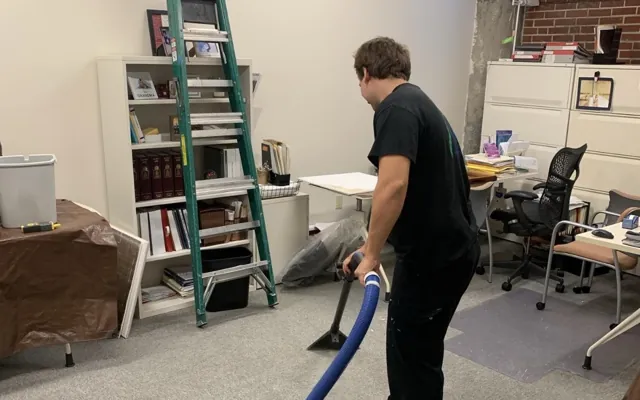
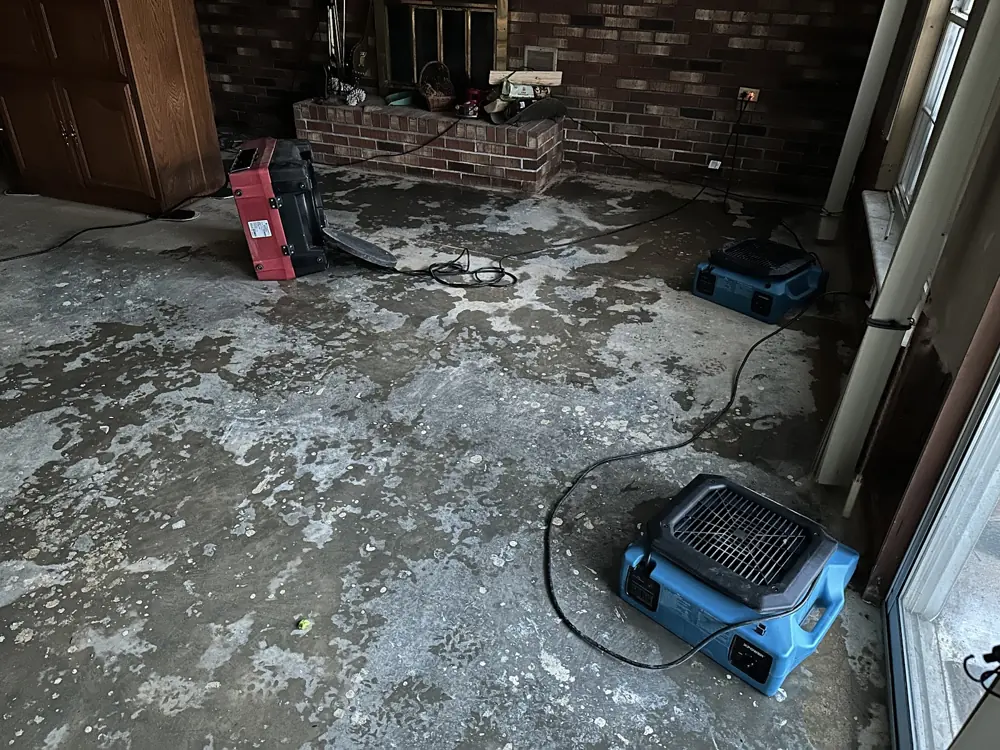
The first hours after water enters a home decide how much can be saved. Crews respond around the clock with truck-mounted and portable extractors to pull standing water fast, then begin drying before it soaks deeper into the structure.

The crew identifies the water source and category, shuts it off where possible, and targets the wettest areas first so the most vulnerable materials are cleared fast.
Truck-mounted and portable extractors pull standing water from floors, carpet, and hard surfaces, reaching the bulk of the water before it soaks deeper.
Water hiding under flooring, in wall cavities, and in the subfloor is drawn out, since standing water left behind slows drying and feeds mold.
With the standing water gone, air movers and dehumidifiers are placed to dry the structure, and moisture readings establish the baseline for the dry-out.

While help is on the way, these first steps, done only where it is safe, limit the damage and protect the insurance claim.
Shut the supply off at the source, or close the home's main valve if the source is not obvious. Stopping the flow limits the damage more than anything else.
Switch off electricity to the affected area, but only if the breaker can be reached without standing in or touching the water.
Get a crew dispatched right away. The sooner extraction and drying begin, the more flooring, drywall, and belongings can be saved.
Take photos and a short video of the water and the affected rooms before anything is moved, so the insurance claim starts strong.
Water extraction in Boston generally runs $1,000 to $4,500 as the first phase of a water damage job, depending on how much water is present, how contaminated it is, and how much area it covers. A small clean-water extraction sits near the low end, while a large or category 3 job runs higher, and full structural drying and repairs add to it. The crew documents the water source and moisture readings for the insurance claim from the start.
Crews reach Boston and the surrounding metro fast, from Dorchester and East Boston to Cambridge, Somerville, Chelsea, Quincy, Brookline, and Newton. See the full list on the areas served across Boston page.
See all areas servedEvery loss is photographed, measured, and logged from the first visit, so the paperwork holds up with your insurance carrier.
Technicians follow recognized IICRC drying standards and prove the work with daily moisture readings, not guesswork.
Emergency dispatch any hour of the day or night, with a real crew on the way, not a callback in the morning.
A real crew dispatched any hour, not a callback in the morning.
Trained technicians following recognized IICRC drying standards.
Truck-mounted, portable, and submersible for any size loss.
The loss is documented and billed to the carrier directly.
As soon as possible. Standing water keeps soaking into flooring, drywall, and framing every hour it sits, pushing materials from salvageable to lost and raising the mold risk. A response within the first day, ideally the first hours, makes the biggest difference in how much can be saved and how long drying takes.
No. Extraction removes the standing and trapped water quickly, which is the urgent first step. Drying comes after, using air movers and dehumidifiers to pull the remaining moisture out of the structure over several days, with readings confirming the framing and finishes reach a verified dry target.
Often, if it is done fast. Hardwood that is extracted and dried quickly can flatten back out, and carpet may be salvageable when the water is clean and pulled early. Materials that sat wet for days, or that soaked contaminated water, are far less likely to be saved.
When it is part of a covered water loss, extraction is typically included in the claim. The crew documents the source, the water category, and moisture readings from the first visit, which supports the claim and establishes the baseline for the drying and any repairs that follow.
Boston crews are on call 24 hours a day, local and fast, and can be on the way within the hour.
Call (508) 593-9358