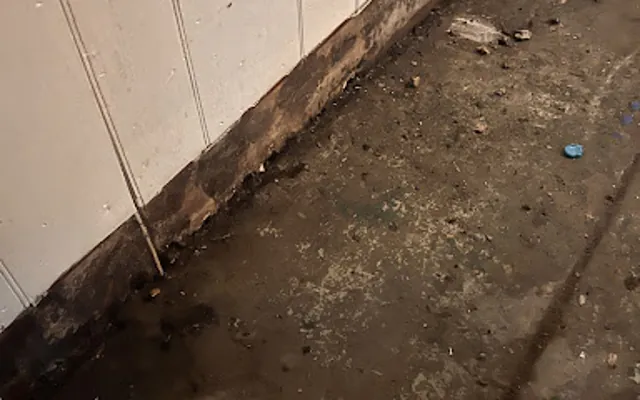
A sewage backup floods the home with contaminated water that carries real health risks. Crews treat it as category 3, removing what it soaked, sanitizing every hard surface, and drying the structure to a verified target before the space is safe.

The crew isolates the contaminated zone, sets up protective equipment for the category 3 water, and stops fixture use to keep more sewage from entering the space.
The sewage is extracted, and porous materials that absorbed it, including carpet, pad, drywall, and stored items, are removed and bagged for disposal.
Hard surfaces are cleaned and treated with antimicrobial to address the bacteria and pathogens that a sewage backup leaves behind on them.
Air movers and dehumidifiers dry the slab, framing, and remaining materials, with moisture readings confirming the space is dry before any restoration begins.

While help is on the way, these first steps, done only where it is safe, limit the damage and protect the insurance claim.
Shut the supply off at the source, or close the home's main valve if the source is not obvious. Stopping the flow limits the damage more than anything else.
Switch off electricity to the affected area, but only if the breaker can be reached without standing in or touching the water.
Get a crew dispatched right away. The sooner extraction and drying begin, the more flooring, drywall, and belongings can be saved.
Take photos and a short video of the water and the affected rooms before anything is moved, so the insurance claim starts strong.
Sewage backup cleanup in Boston generally runs $2,500 to $9,000, depending on how much sewage came up, how far it spread, and how much contaminated porous material must be removed and replaced. A small backup at a floor drain sits near the low end, while a category 3 flood across a finished basement runs higher. Coverage depends on whether a sewer and drain endorsement applies, and the crew documents everything for the carrier.
Crews reach Boston and the surrounding metro fast, from Dorchester and East Boston to Cambridge, Somerville, Chelsea, Quincy, Brookline, and Newton. See the full list on the areas served across Boston page.
See all areas servedEvery loss is photographed, measured, and logged from the first visit, so the paperwork holds up with your insurance carrier.
Technicians follow recognized IICRC drying standards and prove the work with daily moisture readings, not guesswork.
Emergency dispatch any hour of the day or night, with a real crew on the way, not a callback in the morning.
A real crew dispatched any hour, not a callback in the morning.
Trained technicians following recognized IICRC drying standards.
Truck-mounted, portable, and submersible for any size loss.
The loss is documented and billed to the carrier directly.
No. Sewage is category 3 water containing bacteria, viruses, and pathogens that pose a real health risk. It calls for protective equipment, proper removal of contaminated materials, and thorough sanitizing. Trained technicians handle it safely, which matters most in a basement where family members may spend time later.
Hard, non-porous items like metal, sealed plastic, glass, and solid sealed flooring can usually be cleaned, sanitized, and kept. Porous materials such as carpet, pad, drywall, insulation, upholstered furniture, and cardboard that absorbed sewage are contaminated and typically must be discarded.
Many standard policies exclude backups unless a sewer and drain backup endorsement is added, so coverage varies. The crew documents the source, contamination level, and moisture readings so you can file with accurate records for whatever your specific policy includes.
Keep grease, wipes, and debris out of the drains, have old laterals checked for root intrusion, and consider a backwater valve if backups happen during storms. The crew notes the likely cause found during cleanup so a qualified plumbing contractor can clear or repair the blockage.
Boston crews are on call 24 hours a day, local and fast, and can be on the way within the hour.
Call (508) 593-9358