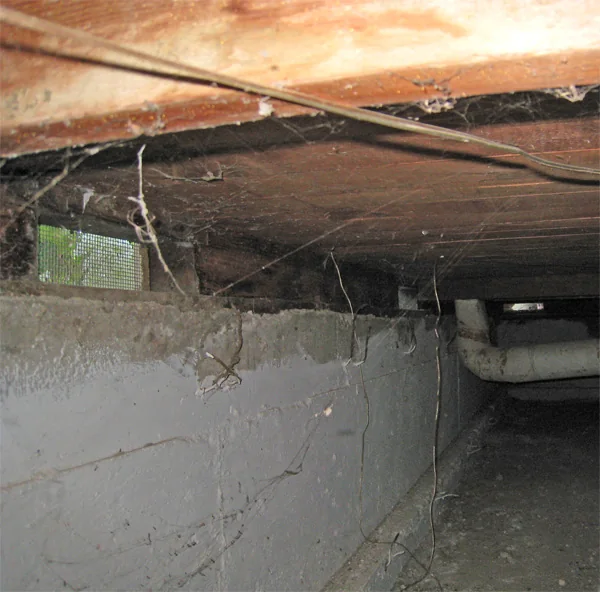
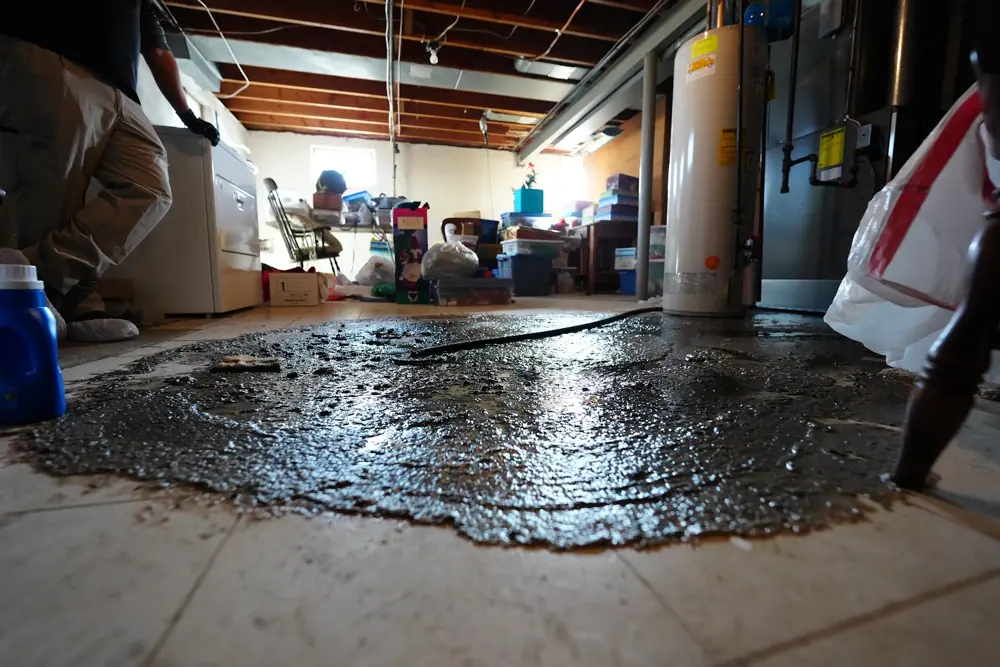
Standing water in a crawlspace rots the framing above it and pushes damp, musty air up into the home. Crews pump out the water, dry the joists and subfloor, and address the moisture source so the space under the house stays sound.

Submersible pumps and extractors clear the standing water from the crawlspace floor, whether it sits on a vapor barrier, bare soil, or a rough slab.
Soaked insulation, fallen vapor barrier, and waterlogged debris are pulled out, since these hold moisture against the framing and slow the entire dry-out.
Air movers and dehumidifiers dry the joists, sill, and subfloor, with moisture readings tracked until the wood above the crawlspace reaches a verified target.
Framing is treated against mold, and the crew notes the water source, whether grading, groundwater, or a failed line, so it can be corrected.

While help is on the way, these first steps, done only where it is safe, limit the damage and protect the insurance claim.
Shut the supply off at the source, or close the home's main valve if the source is not obvious. Stopping the flow limits the damage more than anything else.
Switch off electricity to the affected area, but only if the breaker can be reached without standing in or touching the water.
Get a crew dispatched right away. The sooner extraction and drying begin, the more flooring, drywall, and belongings can be saved.
Take photos and a short video of the water and the affected rooms before anything is moved, so the insurance claim starts strong.
Crawlspace water removal in Boston generally runs $1,500 to $5,500, depending on how much water sits under the home, how much soaked insulation and vapor barrier must come out, and how long the framing needs to dry. A shallow one-time intrusion sits near the low end, while a chronically wet crawlspace with rotting joists runs higher. The crew documents moisture readings and photos of the framing for the insurance claim where the loss is sudden.
Crews reach Boston and the surrounding metro fast, from Dorchester and East Boston to Cambridge, Somerville, Chelsea, Quincy, Brookline, and Newton. See the full list on the areas served across Boston page.
See all areas servedEvery loss is photographed, measured, and logged from the first visit, so the paperwork holds up with your insurance carrier.
Technicians follow recognized IICRC drying standards and prove the work with daily moisture readings, not guesswork.
Emergency dispatch any hour of the day or night, with a real crew on the way, not a callback in the morning.
A real crew dispatched any hour, not a callback in the morning.
Trained technicians following recognized IICRC drying standards.
Truck-mounted, portable, and submersible for any size loss.
The loss is documented and billed to the carrier directly.
Common signs are a musty smell in the home, higher indoor humidity, cupping or soft spots in the floor above, and visible mold on the joists. Because the space is hard to see, many owners only notice the odor first. A quick inspection with a moisture meter confirms how wet the framing is.
It can. Standing water and damp air keep the joists, sill, and subfloor wet, which leads to rot, cupping, and mold over time. Drying the framing promptly and addressing the water source protects the floor structure and keeps the odor and humidity from spreading upstairs.
A sudden event like a burst line or storm intrusion is often covered, while long-term groundwater seepage is usually treated as a maintenance issue. The crew documents the source and moisture readings so the claim reflects what actually caused the water under the home.
Good exterior grading, working gutters and downspouts directed away from the foundation, a sound vapor barrier, and sometimes a dedicated sump all help. The crew points out the likely entry path found during the work so the underlying drainage problem can be corrected.
Boston crews are on call 24 hours a day, local and fast, and can be on the way within the hour.
Call (508) 593-9358