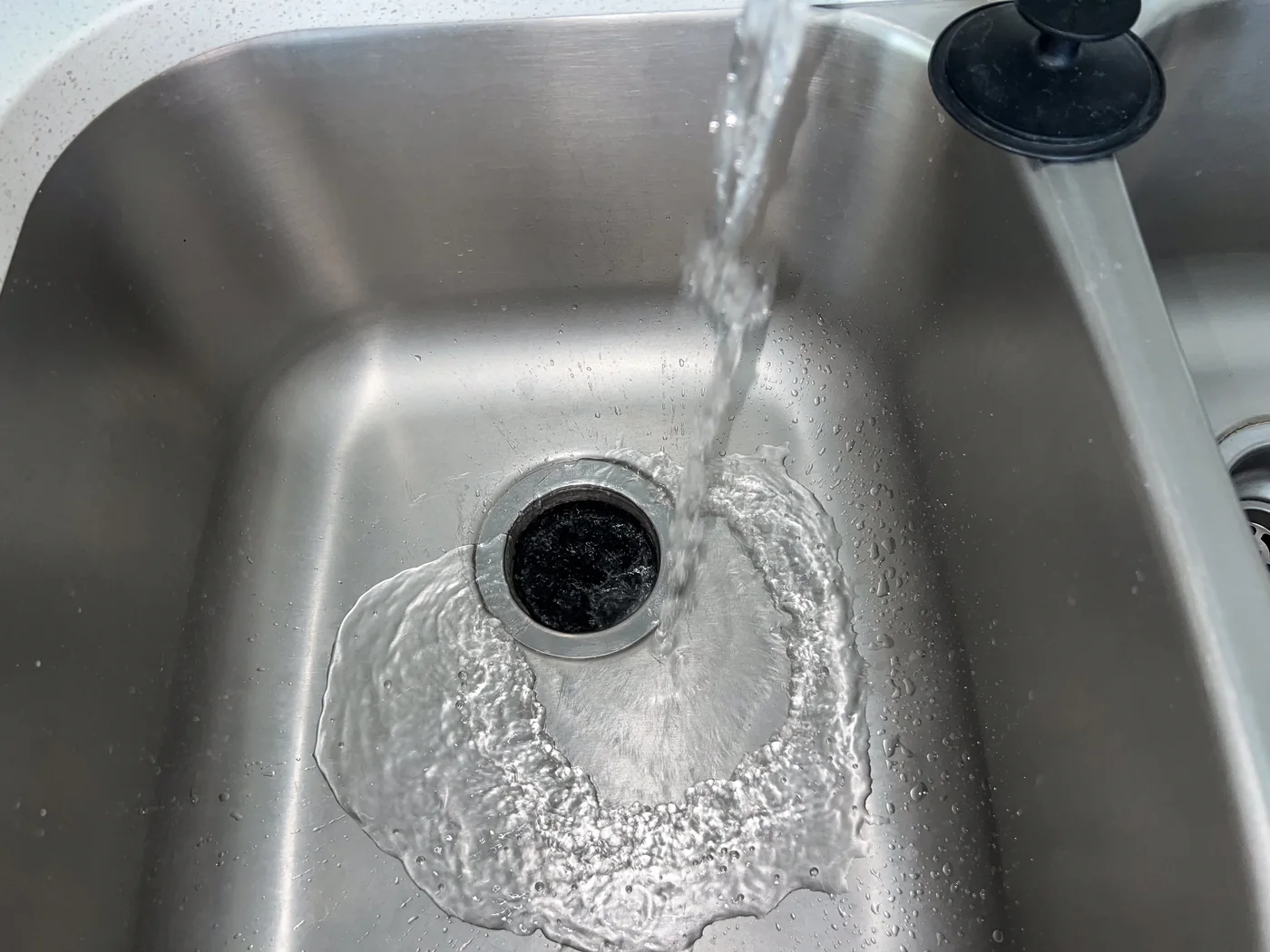
A dripping faucet or a weeping fixture connection seems minor, but the water pools under sinks and inside walls where it quietly rots cabinets and framing. Crews find the hidden moisture, dry it out, and keep a slow leak from becoming a rebuild.

The crew uses moisture meters to map how far the slow leak has spread under the sink, into the cabinet base, the subfloor, and any adjacent wall cavity.
Soaked cabinet bases, swollen flooring, and saturated drywall too far gone to dry are removed so the framing and subfloor can be reached and properly dried.
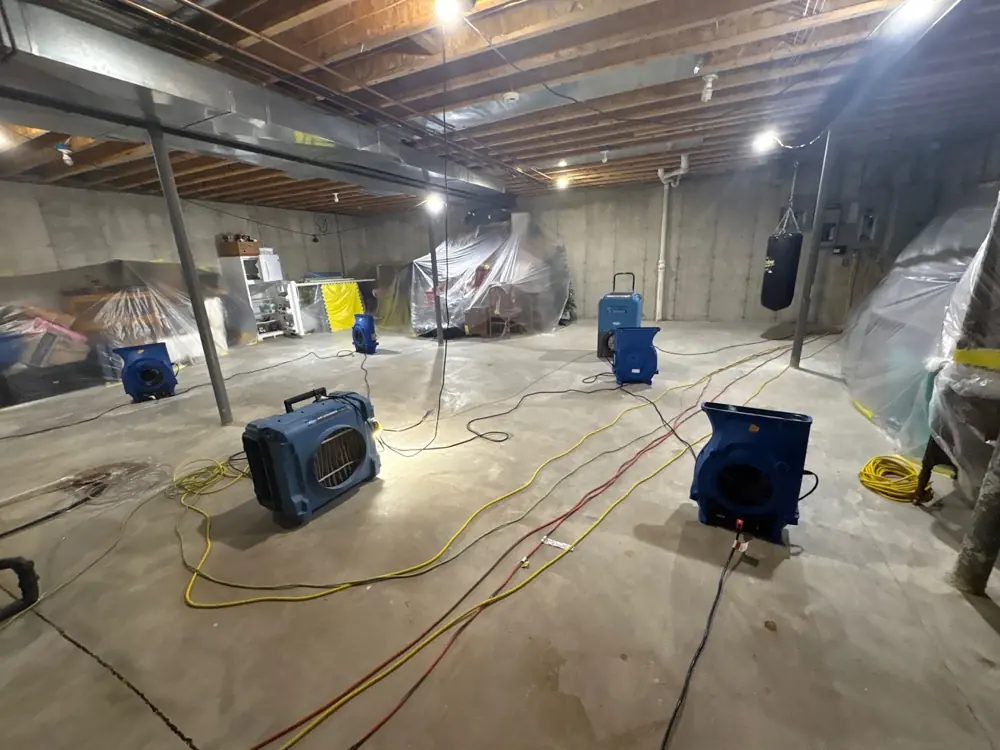
Air movers and a dehumidifier dry the cabinet interior, subfloor, and wall cavity, with readings tracked until the hidden areas reach a verified dry target.
Framing is treated against mold, and cabinetry, flooring, or drywall is restored once the concealed structure reads verifiably dry throughout the affected area.

While help is on the way, these first steps, done only where it is safe, limit the damage and protect the insurance claim.
Shut the supply off at the source, or close the home's main valve if the source is not obvious. Stopping the flow limits the damage more than anything else.
Switch off electricity to the affected area, but only if the breaker can be reached without standing in or touching the water.
Get a crew dispatched right away. The sooner extraction and drying begin, the more flooring, drywall, and belongings can be saved.
Take photos and a short video of the water and the affected rooms before anything is moved, so the insurance claim starts strong.
Faucet and fixture leak cleanup in Boston typically runs $800 to $3,500, depending on how long the leak went unnoticed, how much cabinetry and subfloor absorbed water, and whether mold took hold. A recently discovered drip caught early sits near the low end, while a long-running leak that rotted the cabinet and subfloor runs higher. The crew documents the source and moisture readings for the insurance claim where the loss qualifies.
Crews reach Boston and the surrounding metro fast, from Dorchester and East Boston to Cambridge, Somerville, Chelsea, Quincy, Brookline, and Newton. See the full list on the areas served across Boston page.
See all areas servedEvery loss is photographed, measured, and logged from the first visit, so the paperwork holds up with your insurance carrier.
Technicians follow recognized IICRC drying standards and prove the work with daily moisture readings, not guesswork.
Emergency dispatch any hour of the day or night, with a real crew on the way, not a callback in the morning.
A real crew dispatched any hour, not a callback in the morning.
Trained technicians following recognized IICRC drying standards.
Truck-mounted, portable, and submersible for any size loss.
The loss is documented and billed to the carrier directly.
It often is not. Carriers tend to treat long-term seepage from a worn faucet or valve as a maintenance issue rather than a sudden loss. The crew still documents the source and moisture readings, which helps if any portion of the damage came from a sudden failure rather than gradual wear.
Look for a musty smell under the sink, a swollen or discolored cabinet base, a soft spot in the floor, or peeling finish near the fixture. These often appear before you see standing water. A moisture meter confirms whether the cabinet, subfloor, and wall behind are actually wet.
Sometimes. Solid wood cabinets often dry and hold up, while particleboard bases that sat wet swell and fall apart and usually need replacing. The crew dries what is salvageable and points out the parts that will not recover before any restoration work begins.
The leak needs to be stopped first, either by closing the shutoff or having a qualified plumbing contractor repair or replace the fixture. Once the water source is off, the crew can dry the hidden areas without the moisture returning and undoing the work.
Boston crews are on call 24 hours a day, local and fast, and can be on the way within the hour.
Call (508) 593-9358