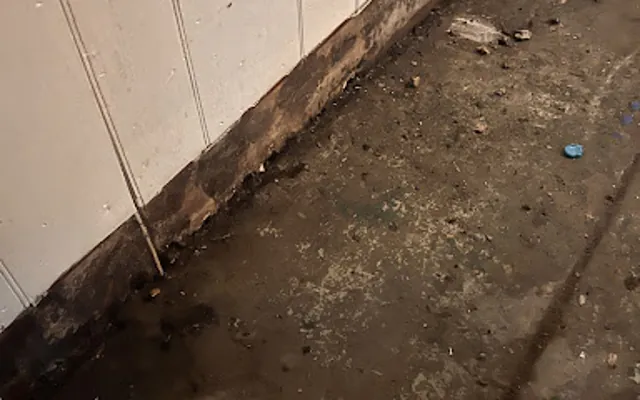
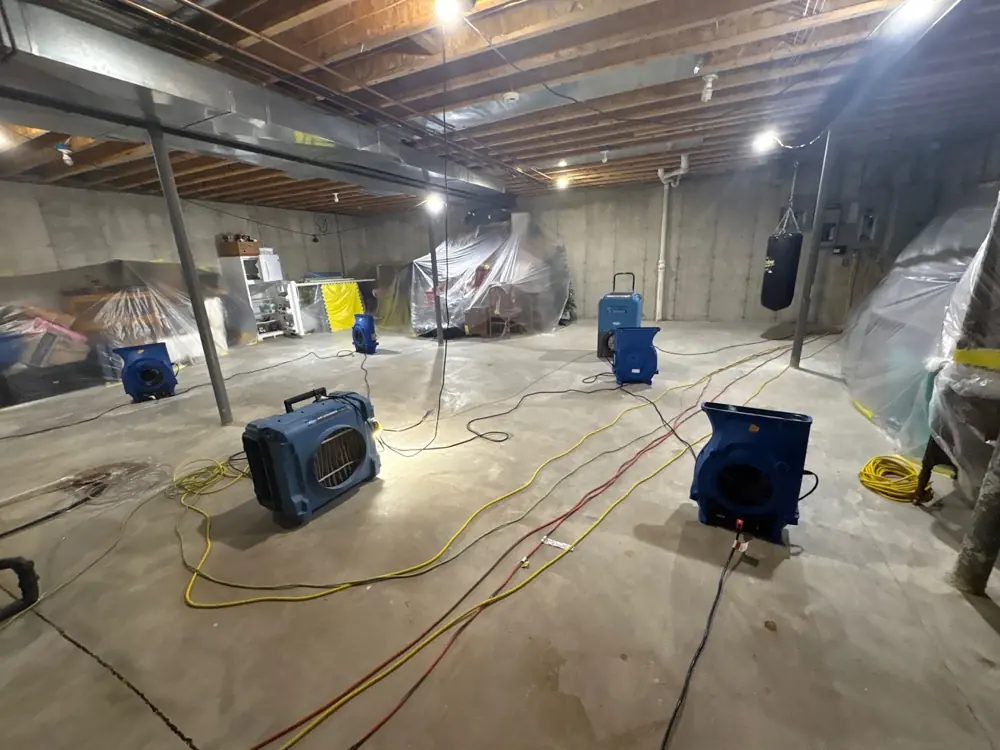
An overflowing toilet spreads water across the bathroom floor and down into the structure fast, and if it carried waste it needs sanitizing too. Crews extract the water, treat the surfaces, and dry the hidden areas the overflow reached.

The water is shut off at the toilet valve, and the crew determines whether it is clean or contaminated and maps how far it spread into the floor and the room below.
Standing water is extracted, and if the overflow was contaminated, porous materials that soaked it up are removed and bagged for disposal.
Hard surfaces are cleaned and sanitized where the water was contaminated, then air movers and a dehumidifier dry the subfloor and ceiling below to a target.
Moisture readings confirm the concealed areas are dry, and flooring or a stained ceiling below is restored once the structure reads verifiably dry.

While help is on the way, these first steps, done only where it is safe, limit the damage and protect the insurance claim.
Shut the supply off at the source, or close the home's main valve if the source is not obvious. Stopping the flow limits the damage more than anything else.
Switch off electricity to the affected area, but only if the breaker can be reached without standing in or touching the water.
Get a crew dispatched right away. The sooner extraction and drying begin, the more flooring, drywall, and belongings can be saved.
Take photos and a short video of the water and the affected rooms before anything is moved, so the insurance claim starts strong.
Toilet overflow cleanup in Boston usually runs $1,000 to $4,500, depending on whether the water was clean or contaminated, how far it spread into the subfloor and the unit below, and how much material must be removed. A clean overflow caught early sits near the low end, while a category 3 overflow that reached a downstairs ceiling runs higher. The crew documents the water category and moisture readings for the insurance claim.
Crews reach Boston and the surrounding metro fast, from Dorchester and East Boston to Cambridge, Somerville, Chelsea, Quincy, Brookline, and Newton. See the full list on the areas served across Boston page.
See all areas servedEvery loss is photographed, measured, and logged from the first visit, so the paperwork holds up with your insurance carrier.
Technicians follow recognized IICRC drying standards and prove the work with daily moisture readings, not guesswork.
Emergency dispatch any hour of the day or night, with a real crew on the way, not a callback in the morning.
A real crew dispatched any hour, not a callback in the morning.
Trained technicians following recognized IICRC drying standards.
Truck-mounted, portable, and submersible for any size loss.
The loss is documented and billed to the carrier directly.
It depends on the source. An overflow from clean supply water in the tank is category 1, though it still soaks the structure. An overflow that pushed up waste from a clog is category 3, contaminated with bacteria, so the crew removes affected porous materials and sanitizes the hard surfaces rather than just drying them.
A sudden accidental overflow is usually covered, while a slow leak around the base that was ignored may be treated as maintenance. The crew documents the category of water and how far it traveled, along with moisture readings, so the claim reflects a sudden event where that applies.
Often yes. Mopping handles the surface, but water works down around the flange, under the flooring, and into the ceiling below where it cannot dry on its own. A moisture meter shows whether those hidden areas are wet, and drying them prevents mold and a sagging ceiling later.
Quickly, especially if it carried waste. Contaminated water begins breeding bacteria within a day, and trapped moisture feeds mold and loosens finishes. Fast extraction, sanitizing where needed, and drying keep a single overflow from becoming a flooring and ceiling repair across two levels.
Boston crews are on call 24 hours a day, local and fast, and can be on the way within the hour.
Call (508) 593-9358