Garages take on water from burst water heaters, frozen hose bibs, snowmelt, and storm runoff, and the damage often creeps into adjoining rooms. Crews extract the water, dry the walls and slab, and protect whatever is stored inside.

Portable and truck-mounted extractors clear the standing water from the garage slab, and the crew checks whether it wicked into shared walls or an adjoining room.
Stored belongings are moved out of the water, and soaked cardboard, shelving, and unsalvageable items are separated so drying can reach the slab and walls.
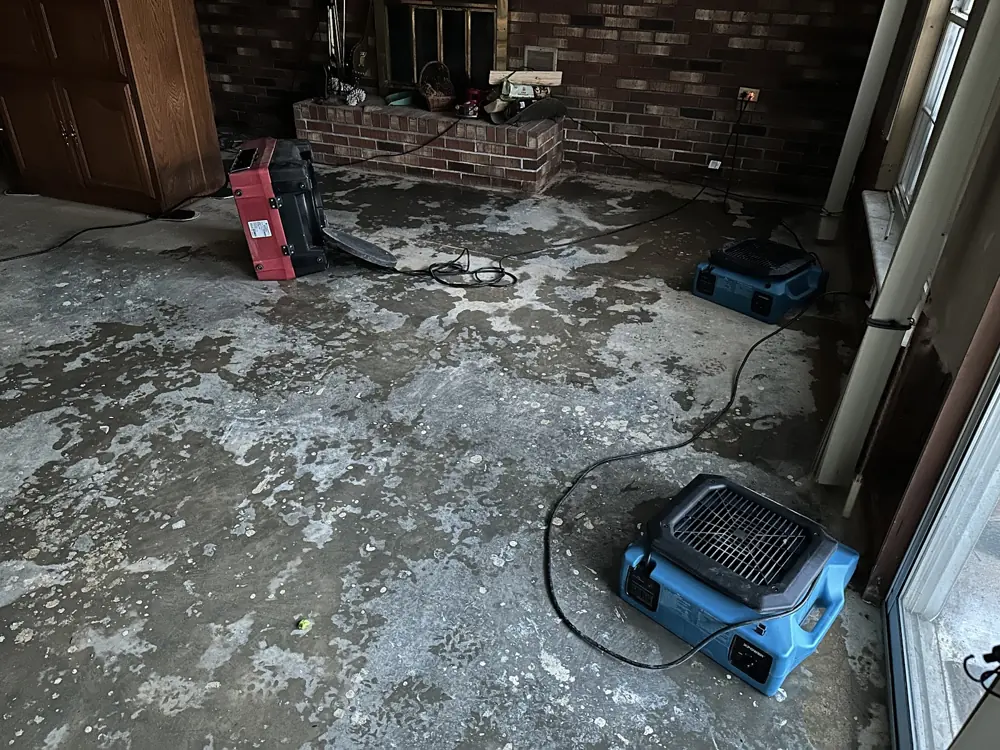
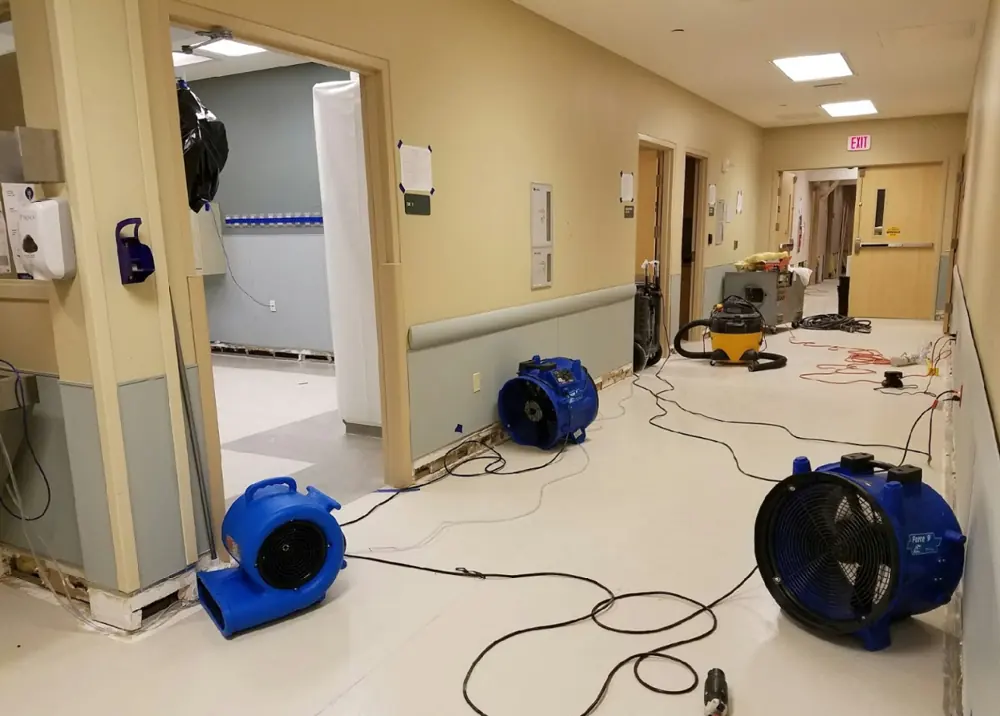
Air movers and dehumidifiers dry the slab, drywall, and the shared wall into the home, with moisture readings tracked until each area reads verifiably dry.
Surfaces prone to mold are treated, and damaged drywall along the shared wall or adjoining room is restored once the structure reaches a verified target.

While help is on the way, these first steps, done only where it is safe, limit the damage and protect the insurance claim.
Shut the supply off at the source, or close the home's main valve if the source is not obvious. Stopping the flow limits the damage more than anything else.
Switch off electricity to the affected area, but only if the breaker can be reached without standing in or touching the water.
Get a crew dispatched right away. The sooner extraction and drying begin, the more flooring, drywall, and belongings can be saved.
Take photos and a short video of the water and the affected rooms before anything is moved, so the insurance claim starts strong.
Garage water damage cleanup in Boston usually runs $1,000 to $4,500, depending on how much water collected, whether it reached the shared wall into the home, and how much drywall and stored material must be handled. A contained slab flood caught early sits near the low end, while a burst water heater that spread into finished rooms runs higher. Sudden loss is typically covered, and moisture readings and photos are documented for the carrier.
Crews reach Boston and the surrounding metro fast, from Dorchester and East Boston to Cambridge, Somerville, Chelsea, Quincy, Brookline, and Newton. See the full list on the areas served across Boston page.
See all areas servedEvery loss is photographed, measured, and logged from the first visit, so the paperwork holds up with your insurance carrier.
Technicians follow recognized IICRC drying standards and prove the work with daily moisture readings, not guesswork.
Emergency dispatch any hour of the day or night, with a real crew on the way, not a callback in the morning.
A real crew dispatched any hour, not a callback in the morning.
Trained technicians following recognized IICRC drying standards.
Truck-mounted, portable, and submersible for any size loss.
The loss is documented and billed to the carrier directly.
It can, especially in an attached garage. Water wicks up the shared wall into adjoining rooms and can reach a unit above through the framing. The crew checks those shared assemblies with a moisture meter so water that traveled out of the garage is found and dried rather than left to grow mold.
A sudden event like a burst water heater or a split frozen hose bib is usually covered, while long-term seepage under the door may be treated as maintenance. The crew documents the source and moisture readings so the claim reflects a sudden loss where that applies.
It depends on the material. Sealed plastic bins, metal, and hard goods usually clean up, while soaked cardboard, paper, and particleboard shelving often cannot be salvaged. The crew moves items out of the water quickly and sorts what can be dried from what needs to go.
Improving the grade and drainage at the door, insulating or shutting off exterior hose bibs before winter, and keeping the water heater maintained all help. The crew points out the entry path or failed component found during cleanup so the underlying issue can be corrected.
Boston crews are on call 24 hours a day, local and fast, and can be on the way within the hour.
Call (508) 593-9358