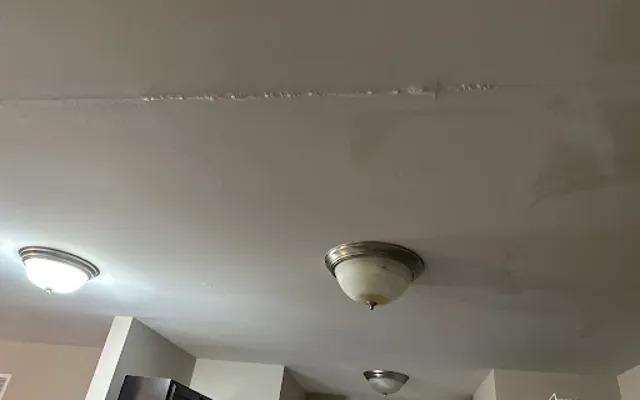
A stained or sagging ceiling means water has already traveled through the structure above. In Boston's plaster and lath homes that water pools out of sight, so crews find the source, relieve the trapped water, and dry the framing before it drops.

Technicians follow the stain back to a roof leak, a failed pipe, or an overflow above, then arrange to stop the water before any ceiling repair is attempted.
Pooled water behind a bulging ceiling is drained through controlled relief points so the saturated plaster or drywall does not fall on its own onto the room below.
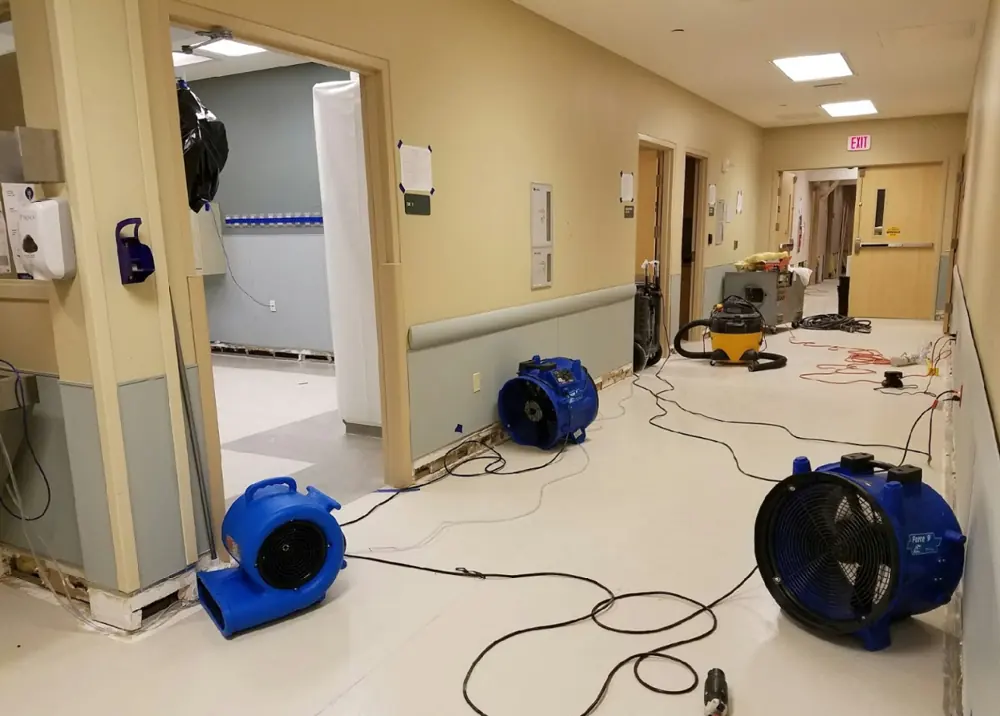
Air movers and dehumidifiers dry the ceiling cavity, joists, and subfloor above, with moisture readings tracking the framing until it reaches a verified dry target.
Unsalvageable plaster or drywall is removed, and the ceiling is patched, skim-coated, and refinished once the structure above reads verifiably dry throughout the affected span.

While help is on the way, these first steps, done only where it is safe, limit the damage and protect the insurance claim.
Shut the supply off at the source, or close the home's main valve if the source is not obvious. Stopping the flow limits the damage more than anything else.
Switch off electricity to the affected area, but only if the breaker can be reached without standing in or touching the water.
Get a crew dispatched right away. The sooner extraction and drying begin, the more flooring, drywall, and belongings can be saved.
Take photos and a short video of the water and the affected rooms before anything is moved, so the insurance claim starts strong.
Ceiling water damage cleanup in Boston typically runs $1,200 to $5,000, depending on how much of the ceiling is saturated, whether old plaster must be removed, and how wet the joists and subfloor above are. A small isolated stain that dries in place sits near the low end, while a collapsed plaster section over a large room runs higher. The crew documents the source, moisture readings, and photos for the insurance claim.
Crews reach Boston and the surrounding metro fast, from Dorchester and East Boston to Cambridge, Somerville, Chelsea, Quincy, Brookline, and Newton. See the full list on the areas served across Boston page.
See all areas servedEvery loss is photographed, measured, and logged from the first visit, so the paperwork holds up with your insurance carrier.
Technicians follow recognized IICRC drying standards and prove the work with daily moisture readings, not guesswork.
Emergency dispatch any hour of the day or night, with a real crew on the way, not a callback in the morning.
A real crew dispatched any hour, not a callback in the morning.
Trained technicians following recognized IICRC drying standards.
Truck-mounted, portable, and submersible for any size loss.
The loss is documented and billed to the carrier directly.
Yes. Water pooling above a ceiling is heavy, and a saturated plaster or drywall section can let go suddenly. Stay out from under a bulging area and keep it clear of furniture. The crew relieves the trapped water in a controlled way so the ceiling does not collapse on its own.
Not until the cause is fixed and the structure is dry. Painting over a damp stain traps moisture, hides ongoing leaks, and lets mold grow in the cavity. The crew confirms the leak is stopped and the framing reads dry with a meter before any cosmetic repair.
Only the sections too saturated or loose to recover. Plaster holds water and can stay soft long after it looks dry, so the crew checks it with a moisture meter. Sound areas are dried and kept, while sagging or crumbling plaster is taken down and rebuilt.
The stain is rarely directly under the source, since water travels along joists before it drips. The crew traces it back to the roof, a pipe, or an upstairs fixture, sometimes in another unit, and confirms the point before drying so the same spot does not fail again.
Boston crews are on call 24 hours a day, local and fast, and can be on the way within the hour.
Call (508) 593-9358